“Don’t ask what the world needs. Ask what makes you come alive and go do it. Because what the world needs, is people who have come alive.”
— Howard Thurman
Pages
Members
WBE Activities
Archives

“Don’t ask what the world needs. Ask what makes you come alive and go do it. Because what the world needs, is people who have come alive.”
— Howard Thurman
Posted in Uncategorized

Helen deLisser
Dr. Helen deLisser uses the gentle Activator Methods Chiropractic Technique. Adjustments are made using a small, hand-held instrument that delivers controlled pressure to specific areas. Helen has a reputation for being competent, informative and approachable. The office is located in a medical professional building in Alameda’s South Shore district, near Crown Beach, 512 Westline Drive, Suite 102
Reach her at 510-769-6980
11 February 2011
Alameda has a number of business networking groups, many run by women. One of them is Women’s Business Exchange of Alameda (WBE). Like most business networking groups, one of their main goals is to help each other grow their businesses. But WBE has another mission. They contribute a portion of the group’s annual dues to worthy non-profit organizations in the community.
On a beautiful Winter evening, the ladies of WBE hosted a BBQ at a local women’s shelter. This event came about because long-standing WBE member Diane Sickman had a grill in her yard that wasn’t getting any use. Given her huge heart and helpful nature, her first thought was to donate it to the women’s shelter. After speaking to the shelter’s director, Diane decided that there should be a big BBQ to inaugurate the grill. She organized the WBE gals, who cooked food for 30 people: ribs, hot dogs, sausages, and beans. Homemade lemon bars, garlic bread and salad. The shelter folks supplied side dishes and drinks. It was a full-on BBQ, in the middle of February.
 WBE Ladies at the Grill
 Diane Makes Sure the Grill Temperature is Right and Ann Helps Her Out
The women and children at the shelter had a marvelous time, feasting and chatting with the WBE girls. Afterwards, the cooks and servers had their own little tailgate party. It feels good to do good, as you can see by the smiling faces.
 WBE members from left to right: Vickie Bockencamp, Emily Weil, Ann Cook, Diane Sickman, Helen DeLisser, Kerry Hargraves, Shirley Runco, and Claudia Ruiz.
Posted in Alameda, CA, • Ann M. Cooke, • Diane Sickmen, • Emily Weil, • Kerry Hargraves, • Shirley Runco, Claudia Mar Ruiz, CMT, Massage Therapist, Diane L. Sickmen, Diane Sickmen, DOWSERSHIRLEY, DOWSERSHIRLEY ( Shirley Runco ), Events, Group Photo, inspiring women, Kerry Hargraves, ONENESS ASTROLOGY WITH KI (Renee Bornstein), Shirley Runco, Vickie Bockenkamp
 Offering deep tissue, craniosacral, and pregnancy massage. Ms. Ruiz has been providing professional massage therapy to doctors, business owners, the elderly, teachers, sales professional, lawyers and many more individuals for 10 years in Alameda.
Ms. Ruiz graduated from National Holistic Institute in 2000, and brings a deep healing in her session to clients with back, neck & knee pain, job stress, grief issues. Her massages also stimulate healing of computer injuries like carpal tunnel syndrome, or even foot & elbow problems. These treatments benefit individuals who need a therapist with a vast experience and a deep caring personality.
The services are provided in 2 locations:
501 South Shore West Center, Suite D, Alameda, Ca 94501. San Jose at Foxworthy Chiropractor Center.
Claudia also brings community together to experience healing through the sound of crystal bowls.
Deep Tissue, Craniosacral Therapy, Medical Massage, Pregnancy massage, Swedish, Shiatsu, and Sports massage.
She integrates her skills as a Mediator for her clients as a good listener. Also gives insights about their path that is printed in their hands as a Hand Analysis practitioner.
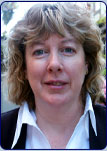
Power Tools for Learning, Inc™. established in 1997, helps people of all ages with learning difficulties. Founder Vickie Bockenkamp started Power Tools as a
result of her own experiences with learning disabilities. Bockenkamp struggled with learning disabilities as a child, and tried to cope with them as an adult. Later, watching her own child suffer with similar learning problems, she became determined to find a way to help herself, her daughter, and others with such
learning problems.
Bockenkamp trained and worked with the Davis Dyslexia Training Program in Burlingame, CA, and also became an Advanced Structure of Intellect Trainer. With Dr. Frank Belgau, of Balametrics, Inc., Vickie studied The Learning Breakthrough Program, still in use at Power Tools for Learning. She did additional research and found another existing program, SAMONAS Sound Therapy, to assist in correcting her own Central Auditory Processing Disorder.
Using Nutritional Therapy and the modalities
listed above Vickie corrected “dyslexic symptoms” and a 95% hearing loss with which she had been earlier diagnosed.
Bockenkamp was part of the National Association for Child Development’s Psycho-Acoustic Research Team and has been trained in the application of The Listening Program by Advanced Brain Technologies. In 2001, she developed a protocol for correcting sensory integration issues linked to an individual’s ability to process information. The protocol addresses and corrects dyslexic symptoms, Attention Deficit Disorder (ADD), Attention Deficit Hyperactivity Disorder (ADHD), Central Auditory Processing Disorders, and Physical and Mental Midline processing disorders. The protocol also addresses behavioral visual processing issues, which create stress while reading.
Bockenkamp has documented over 500 clients
with an 80%-90% success rate utilizing her own formulated protocol.
She continues her own program’s research and development as she serves her many clients, children and adults, who come from all over the United States.
Bockenkamp has a Bachelor’s degree in Psychology and is affiliated with Advanced Brain Technologies, Inc., Balametrics, Inc., and SOI Systems, Inc.
For more information on the Power Tools for Learning Program please contact Vickie Bockenkamp at 510-337-9838 or vickie@toolsforlearning.com.
Vickie Bockenkamp
Power Tools for Learning
1230 Ballena Blvd.
Alameda, CA 94501
Ph: 510-337-9838
Posted in * WBE MEMBER PROFILES, Vickie Bockenkamp
Every year we WBE women enjoy our annual retreat at Asilomar in Pacific Grove, California. We create special moments to rejuvenate, play, inspire, make art, let go, and laugh.
We laugh a lot.

Boardwalk to the beach
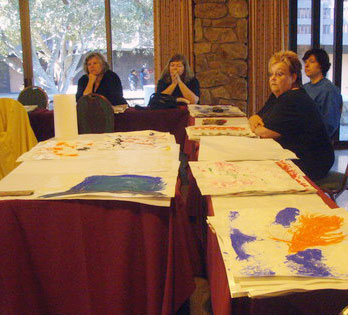
Post fingerpainting discussion
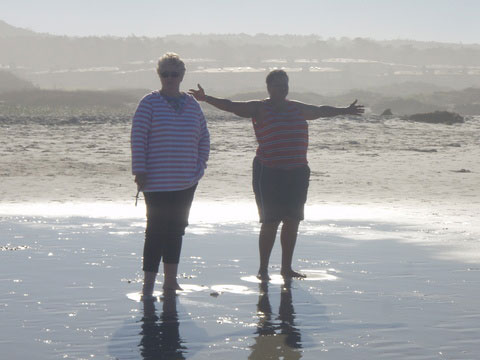
Welcoming the waves!
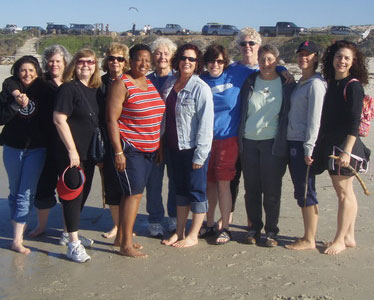
WBE community

Asilomar sunset
Posted in * WBE Group Photo, Events, Group Photo, inspiring women
Tagged Annual Retreat, Asilomar
The one thing that I do is top prioritize my top three agenda items in a given day – but only 3, no more. I do them FIRST. Top of the list is defined by importance, not by desire.
There are two tasks: “demand and batch”. The tele or email is not a demand, but gets in line after your top three agenda items are completed. Something to shoot for.
Look at your inbox. Anything that’s been in the basket longer than 30 days, just throw out. Chances are, if you haven’t needed it or had an inquiry about it, who cares? Of course that is assuming you have done the first thing Ali said: don’t move a piece of paper twice.
Posted in * WBE Service Project
Tagged linda tripp, oakland business woman, saving time, time management
http://www.onenessastrologywithki.com/
Focus your attention on one thing, completely, and then move onto the next thing, completely. I learned this from studying Ki Aikido. We have an exercise called 8 Directions. We turn, focus all of our energy and attention in one direction, then turn and do it again. This trained us to deal with multiple, simultaneous attacks (called rondori). Since the whole purpose of training martial arts was to help with my daily life, I use “8 Directions” in dealing with my very busy “million things at once” lifestyle. Computers, by the way, do the same thing, only they split the tasks into microseconds of attention. We have to spend just a bit more time than that on each thing to make progress, but it’s the same principle.
And here’s another, related one:
Even if you don’t have time to finish a project, you can still make progress on it. I used to pass up working on anything that I couldn’t finish right then and there. I’d leave it until I had the requisite time. I thought that was being efficient, but actually, it wasn’t. There’s a psychological component to watching tasks pile up, especially if there’s physical evidence of them not getting done (think of the dishes piling up in your sink). Things begin to get overwhelming, and the time necessary to tackle that put-off problem is now much greater. It doesn’t take long to get into avoidance habits, and to feel stressed and unsuccessful. It actually saves time, and a certain amount of self-esteem, to do even part of a task. Do it with full attention, for as much time as you have. Then move on to the next thing. Those dishes? Do 3 or 4 of them, even if you have to leave the rest in order to go to the office, pick up the kids, etc. When you get home, there’ll only be a few dishes in the sink, and you’ll have the time to do just those few. You’ll also get a feeling of progress, which helps you tackle the rest of the jobs in your day.
Put things away as they need to be, rather than piling them up. Why walk past the coat closet to throw your coat on the dining room chair? Why move that stack of books back and forth from the kitchen table to your desk in order to have enough room to eat or work? Just put them in the bookcase. It’s hard to be disciplined enough to do this, but it does save time. And piles.
Posted in * WBE Service Project
Tagged renee bornstein, saving time, time management
Diana Simon,
Simon Says,
Simonsaysd1@yahoo.com
I can be a procrastinator, so I have created a method for myself to get things accomplished in spite of myself.
For whatever tasks or chores I have, I also have a number of things I’d rather do instead.
I make a list of the tasks in order of importance. I don’t need a list of the “rather-do’s” since I know what they are. Then I make a deal with myself: I have to get one of the tasks completed, then I get a time – out to do a “rather-do” (As long as it doesn’t take too long–going on a vacation doesn’t count.)
Then I have to do another task, then another “rather-do”, etc.
It really is a trick, too, because I often find myself in task mode and completing the tasks all at once. I think the real trick is getting started!
1. I like opening my mail standing over the shredder and recycling bins...so I can throw away or shred the 80% of the mail that deserves such. The other 20% gets immediately separated into folders for bills to be paid, reading material for the bathroom, other pending, etc…..
2. Making the following regular monthly appointments at the time of the service, like the next haircut appointment as I leave the current one.
3. I also like answering all business phone call voice messages before the day is over, no matter what.
4. Always having two extras on hand of office supply essentials, like printer ink cartridges, reams of paper, shipments of blank checks, etc.
5. Before leaving the office, making a list of what needs to be done the next day.
6. Having ONE calendar.
 Women's Business Exchange Alameda, California